Participant 1: Can you say that third aspect, the more mature aspect is also where perception….
David: There’s only the Self. There’s only the Self, and it’s not anywhere now. It’s in and it’s out. It’s up and it’s down. And it’s not in and it’s not out and it’s not up and it’s not down. It’s just an all-pervasive sense of everything being Consciousness. Everything is in Consciousness. I don’t know what to say. Sahaja Samadhi is a step beyond that. That’s a good state, full self-realization is a good state in that grand Unity, when Krishna says, “Arjuna, you will see all beings in the Self and also in Me.”
Are you drinking this?
Participant 2: Yeah, I like it.
David: It’s beautiful. It’s very beautiful. Sahaja is one step…. Sahaja is indescribable. It’s that the body too becomes radiantly embodied in such a subtle way to communicate the totality of that Brahmanic experience as the physical form itself. It’s being bodily relaxed in all of that, and a kind of new state comes and announces itself called sahaja samadhi.
So, there’s no mature or infantile stages of sahaja samadhi. Sahaja samadhi itself is a kind of retirement from all samadhi. It’s just a quality of living that spontaneously goes on in a fully illumined condition when there’s nothing left to realize. And in that state it’s the walking, talking divinity of the teacher that itself is worthy of contemplation. Darshan comes right on the surface of the body at that point.
The body itself comes to play a central role. It’s the autonomous functioning of the physical as the Absolute in God that is sahaja samadhi. It’s as if it’s a divinified human being. You can see the divinity right on the surface of the skin. You can see not just some abstract unity holding that being or radiated by that being, but the entirety has somehow been encapsulated in and as this divine form. The body becomes so sacred, beyond sacred. That’s such a paltry word for what I’m trying to point to.





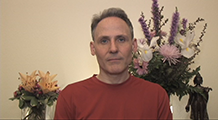 DL # I-58
$10.00
DL # I-58
$10.00
 DL # 137
$10.00
DL # 137
$10.00
 DL # 136
$10.00
DL # 136
$10.00
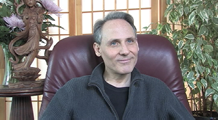 DL # 135
$10.00
DL # 135
$10.00
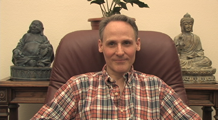 DL # I-57
$10.00
DL # I-57
$10.00
 DL # 134
$10.00
DL # 134
$10.00
 DL # 133
$10.00
DL # 133
$10.00
